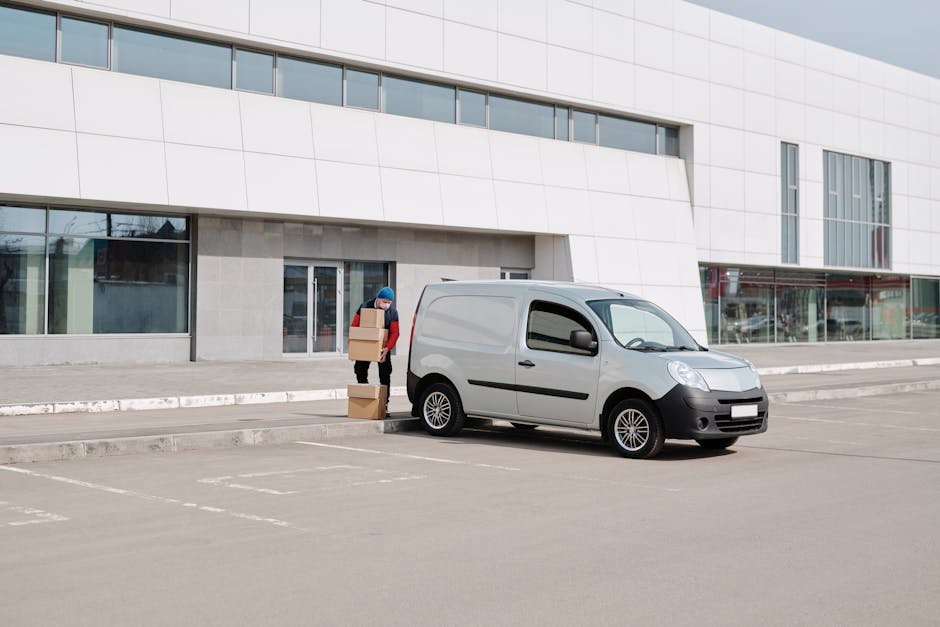
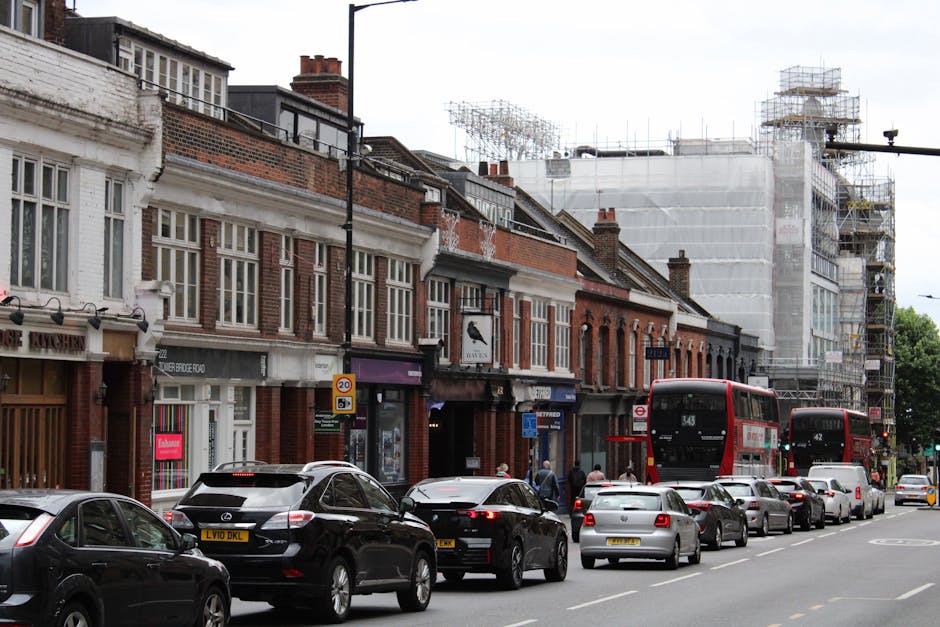
SE14 Removals Parking Rules and Best Loading Spots: A Practical Local Guide
If you are planning a move in SE14, parking can make or break the day. The van may be booked, the boxes may be packed, and the staircase may already be testing everyone's patience - but if the vehicle cannot park safely and legally, everything slows down. This guide on SE14 removals parking rules and best loading spots is here to help you avoid that messy middle bit where time slips away and stress creeps in.
New Cross and the wider SE14 area are a bit of a mixed bag: some roads are narrow, some are busy, and some have tight corners that leave little room for a large removal van to settle in. The good news? With the right planning, you can choose sensible loading points, reduce walking distance, and keep the move moving. In other words, fewer awkward lifts, fewer double-handled items, and a much calmer start.
Below, you will find a clear, local-first breakdown of parking considerations, loading strategies, common mistakes, and practical ways to make a removals day smoother. We'll also point you to useful service pages and preparation advice where it helps, including removals in New Cross, house removals in New Cross, and flat removals for smaller SE14 properties.
Table of Contents
- Why SE14 removals parking rules and best loading spots Matters
- How SE14 removals parking rules and best loading spots Works
- Key Benefits and Practical Advantages
- Who This Is For and When It Makes Sense
- Step-by-Step Guidance
- Expert Tips for Better Results
- Common Mistakes to Avoid
- Tools, Resources and Recommendations
- Law, Compliance, Standards, or Best Practice
- Options, Methods, or Comparison Table
- Case Study or Real-World Example
- Practical Checklist
- Conclusion
- Frequently Asked Questions
Why SE14 removals parking rules and best loading spots Matters
Parking is not a side issue on moving day. It is the bit that decides whether the van can get close enough to the front door, how long the team spends carrying items, and whether the move feels organised or slightly chaotic. In SE14, that matters even more because local streets can be tight, shared, or busy at peak times.
Truth be told, even a carefully packed move can go sideways if the van has to park half a street away. A sofa becomes a 60-metre carry. A fridge suddenly needs two extra turns around cars. And if you have been living in a flat up a narrow staircase, nobody wants to add an unnecessary long haul on top of that.
Good parking planning also helps with safety. Shorter carry distances reduce the risk of bumps, drops, and strained backs. If you are moving anything awkward - wardrobes, beds, mirrors, pianos, or simply a lot of boxes - a sensible loading point can make the job noticeably safer.
If you are moving furniture specifically, it can help to read our guide to furniture removals in New Cross alongside this article. The two topics go hand in hand, really. Furniture may be the item, but parking is the setup.
Expert summary: In SE14, the best loading spot is usually not the closest-looking space on the map - it is the place that gives you legal access, enough manoeuvring room, and the shortest safe carry from door to van.
How SE14 removals parking rules and best loading spots Works
Every removal is slightly different, but the logic stays the same. You need to identify where a van can stop, for how long, and whether loading is permitted there without causing an issue. That may sound simple. Sometimes it is. Sometimes, not so much.
In practice, the process usually involves four things:
- Street layout: Is the road wide enough for the vehicle and moving traffic?
- Restrictions: Are there permit zones, single yellow lines, red routes, or time-based loading limits?
- Access: Can the van get close to the property without blocking driveways, junctions, or crossings?
- Manoeuvrability: Can the driver leave again without reversing into a nightmare?
SE14 includes residential roads, estate access points, and busier cut-through routes. Some roads are excellent for quick loading if timed well. Others look convenient but are actually poor choices because they attract more traffic or allow only awkward stopping positions. A place that looks "just outside the building" can still be the wrong option.
For broader moving support, many people also pair parking planning with booking a man and van service in New Cross or a flexible man with van option, especially where access is tight and timing matters. That kind of set-up suits short urban moves rather well.
And yes, the best loading spot is often about compromise. A slightly longer walk on a wide, legal stretch can be better than a risky stop right outside the door. The van may be a little farther away, but the move itself becomes smoother. Less fuss. Less waiting. Less "can you just move it a bit?"
Key Benefits and Practical Advantages
Once parking is sorted properly, a move usually feels more controlled from the first lift onwards. Here is what good planning gives you.
- Shorter loading times: The closer and safer the stop, the faster the handover between property and vehicle.
- Lower risk of damage: Fewer long carries mean less chance of knocking walls, scuffing furniture, or dropping boxes.
- Better driver access: A van that can park and leave cleanly keeps the whole job on schedule.
- Less physical strain: Especially useful for flats, stairs, and heavy items.
- Cleaner timing: If you have building move-out deadlines or access windows, parking control matters.
There is also a quieter benefit: confidence. When everyone knows where the van is going and how loading will work, the move feels less like a guessing game. That sounds small, but on moving day it matters a lot. The atmosphere changes. People relax a bit.
For larger homes, it may also help to combine parking planning with house removals support in New Cross. For apartments and tighter stairwells, flat removals services are often the more sensible fit, because the whole job is shaped around access from the start.
Who This Is For and When It Makes Sense
This guide is for anyone moving in SE14 who does not want parking to become the hidden problem nobody planned for. That includes:
- homeowners moving in or out of New Cross and nearby streets
- flat tenants dealing with staircases, shared entrances, and tight road access
- students moving with a few boxes, a desk, and the usual odd chair that somehow always appears
- office teams shifting equipment and furniture
- people with large items such as beds, sofas, pianos, or appliances
It also makes sense if your move has a fixed start time, if the road is known for congestion, or if you are using a removal van that needs precise positioning. The busier the street and the bigger the item, the more useful this planning becomes.
If you are moving on short notice, a service such as same-day removals in New Cross can still work well - but only if parking is thought through quickly and clearly. Same-day does not mean "wing it". Not in London, anyway.
For students in particular, checking the route from the entrance to the van can save real time. A small move with poor parking can take longer than expected. We have all seen that one person carrying three bags, a lamp, and a trailing box because the van had to stop too far away. Not ideal.
Step-by-Step Guidance
Here is a practical approach that works well for SE14 moves. It is straightforward, but it does need a bit of care.
1. Check the property frontage first
Look at where the van would actually stop. Ask: is there room for a loading bay, kerbside stop, or short-term waiting area without blocking traffic or neighbours? If the front door is on a narrow street, think about the angle of approach as well as the space itself.
2. Note the road markings and signs
Look for loading restrictions, parking bays, yellow lines, or resident-only spaces. If the signage is unclear, do not guess. That is where moving day becomes a paperwork day, and nobody wants that.
3. Measure the walking distance
The best loading spot is often the one that keeps the walk short enough to protect time and reduce strain. If there is a legal bay 20 metres away and a risky kerb space by the door, the bay may be the better choice.
4. Choose a loading plan for the bigger items first
Think about the awkward items: mattress, wardrobe, sofa, piano, white goods. If you can position the van to make those lifts easier, the rest of the move usually follows more smoothly. For larger pieces, it may help to review the advice in our bed and mattress moving guide before the day.
5. Build a timing buffer
In London, traffic and parking are rarely perfectly obedient. Allow a little extra time for finding the stop, moving the van, or waiting for a space to clear. A ten-minute buffer can feel like a luxury. It is not. It is sensible.
6. Share the plan with everyone involved
Tell the movers, the driver, and if needed the building management where the vehicle will be. A quick message can save a lot of walking around with confused expressions. It really can.
7. Keep the loading route clear
Once the van is parked, make sure the path from the property to the vehicle is free from bins, bikes, loose mats, or anything else that slows people down. One small trip hazard on a rainy pavement can throw the whole rhythm off.
Expert Tips for Better Results
These are the sorts of small things that make a real difference on the day.
- Scout the street at the same time of day: A road that looks fine at 10 a.m. may be much busier at school run time or early evening.
- Use a helper at the kerb: One person can watch traffic, guide the driver, and keep the loading line moving.
- Protect the schedule with packing readiness: If boxes are not sealed and labelled, no parking plan will save time. For help with that side of things, see packing and boxes in New Cross and expert packing solutions.
- Use the nearest legal stop, not the nearest imaginable stop: This is one of those small discipline things that pays off.
- Plan for heavy or fragile items separately: Items like pianos and tall cabinets deserve more careful positioning.
If your move involves a delicate instrument, it is worth reading piano removals in New Cross and even the article on why professional piano moving is wise. A piano is not the sort of thing you want to carry from a questionable parking spot just because it looked convenient in the moment.
Another practical tip: if you are moving from a cluttered home, clear items before the van arrives. Our advice on decluttering before moving and pre-move cleaning steps can help you reduce the number of trips needed. Fewer trips means less street exposure, which is handy in SE14.
Common Mistakes to Avoid
Parking mistakes are often small ones, but they snowball fast. Here are the ones that cause trouble most often.
- Assuming a space is fine because it is empty: Empty does not mean legal.
- Ignoring loading restrictions: Some streets allow stopping only at certain times, or only for loading if you remain with the vehicle.
- Forgetting about access for other residents: Blocking a driveway or entrance can create a dispute you do not need.
- Choosing the closest spot over the safest one: A slightly farther legal space is usually the better call.
- Not checking van size against the street: A larger removal van may not suit every road in SE14.
- Leaving the loading plan until the van arrives: That is how five-minute decisions become twenty-minute delays. Easy to do, though.
One more thing: do not underestimate how quickly a small issue can stack up. A van parked awkwardly, a lift not booked, a box not sealed, and suddenly the whole day feels louder than it should. Not a disaster, just avoidable friction.
If the move is especially tight, it may be worth talking to a team that understands local access conditions. You can start with the man and a van service or explore removal services in New Cross to match the job to the street.
Tools, Resources and Recommendations
You do not need a complicated toolkit for this, just the right information and a few sensible habits.
- Street view and mapping tools: Useful for checking road width, junctions, and possible loading positions in advance.
- Property access notes: Keep door codes, lift bookings, and entrance instructions in one place.
- Labels and marker pens: The faster boxes are identified, the faster they get loaded.
- Furniture covers and straps: Helpful if the loading point is a little farther away than ideal.
- Parking permit information: Always worth checking in advance if your street relies on resident or visitor permissions.
For wider planning, you may also find these pages useful: services overview, pricing and quotes, and contact the team if you want to ask about access before booking. That sort of quick conversation can save a surprising amount of stress later.
If some of your items need to be stored before or after moving day, look at storage in New Cross. Sometimes a staged move is the cleanest solution, especially where parking is tricky and timing is tight.
Law, Compliance, Standards, or Best Practice
Parking and loading in SE14 should always be handled with care and in line with local restrictions, road signage, and any relevant council rules. Because borough-level rules can change and streets may have different controls, it is sensible to check current information rather than rely on memory or assumptions. That is the safest way to approach it.
Best practice usually means:
- staying within marked or permitted loading areas
- avoiding obstruction of pedestrians, driveways, crossings, and junctions
- following time windows for loading and unloading
- keeping the vehicle attended where required
- planning access so the move does not create unnecessary risk
From a moving-service perspective, good operators also think about safety, insurance, and the handling of goods. If you want to understand how a professional team approaches this side of the work, see insurance and safety and health and safety policy. Those pages are useful if you want reassurance that the practical side is being taken seriously, not just the transport itself.
For larger moves, compliance is not only about parking. It also covers safe lifting, careful packing, and sensible scheduling. A small detail, but an important one. A move that respects the rules usually goes more smoothly, and that is good for everyone on the street.
Options, Methods, or Comparison Table
Different parking and loading approaches suit different SE14 moves. Here is a simple comparison.
| Approach | Best For | Advantages | Watch Outs |
|---|---|---|---|
| Kerbside loading outside the property | Wide, quiet residential streets | Shortest carry, quickest loading | Only works if legal and safe |
| Nearby legal loading bay | Busier roads with clear bay signage | Usually more compliant and predictable | May require a longer walk |
| Timed early-morning loading | Streets busier later in the day | Less traffic, easier manoeuvring | Needs good punctuality and preparation |
| Pre-arranged access with a smaller vehicle | Narrow roads and awkward corners | Easier to position, less disruption | May need extra trips if volume is high |
There is no single winner here. The right answer depends on the street, the size of the van, and the type of property. For example, a basement flat on a narrow street may be far better served by a smaller vehicle and short loading window than by a large van hunting for the perfect space.
If you are dealing with awkward access, our article on New Cross Gate removals for narrow streets adds more local context. It pairs nicely with this guide.
Case Study or Real-World Example
Here is a realistic SE14-style moving scenario. A tenant is leaving a first-floor flat on a road with limited space and frequent passing traffic. At first glance, the obvious parking choice is directly outside the building. But on arrival it turns out the gap is too tight for a safe stop, and there is no room for the van to remain without blocking a driveway.
Instead of forcing it, the mover uses a legal space a little farther along the road. It adds a short walk, yes, but the load-out becomes calmer. Boxes move in a steady line. The sofa is carried with room to turn. No one is standing in the road juggling stress and furniture at the same time.
That move probably took a few extra minutes overall, but it avoided delays, awkward shuffling, and a few choice words muttered under breath. You know the sort.
In the same move, the customer had already boxed fragile items and packed ahead of time using advice similar to package your items and wait for us to come. That preparation meant the loading sequence stayed simple. One person at the door, one at the van, no confusion. The day ended up feeling much more manageable than it first looked on paper.
Practical Checklist
Use this checklist before your SE14 move.
- Check street restrictions and loading signs in advance
- Confirm whether a permit, visitor pass, or notice is needed
- Look for a legal loading spot near the property
- Measure how far the carry will be from door to van
- Book the move for a quieter time if possible
- Pack and label boxes before moving day
- Set aside fragile and heavy items separately
- Keep paths clear inside and outside the property
- Share access instructions with the removals team
- Have a backup parking option in case the first choice is taken
Quick reminder: a solid parking plan is not about perfection. It is about having enough control that the day stays calm even if one small thing changes. That is what good local planning does.
Conclusion
SE14 removals parking rules and best loading spots are really about one thing: making moving day easier, safer, and less rushed. The right loading point shortens carries, protects your furniture, keeps the van legally positioned, and gives everyone a bit more breathing room. In a part of London where roads can be tight and traffic can be unpredictable, that is not a minor detail. It is central to the job.
Whether you are moving a small flat, a family home, an office, or a single heavy item, the smartest approach is the same: check the street, plan the stop, prepare the load, and leave yourself a little margin. The people who do that tend to have a much smoother day. Simple as that.
If you want help organising the move, it is worth exploring the wider service pages and getting advice on access, timing, and the right vehicle for your street. A little planning goes a very long way, and it can save you from the kind of moving-day chaos that nobody remembers fondly.
Get a free quote today and see how much you can save.
And if you are still at the planning stage, that is honestly the best time to sort the parking question out - before the boxes are stacked, before the van turns up, and before the day gets noisy. A calm start is a good start.
Frequently Asked Questions
What are the main SE14 removals parking rules I should check first?
Start with the street signs, yellow line restrictions, loading bay markings, and any resident permit rules. In SE14, those details matter because a space that looks available may still have time limits or loading conditions.
Where are the best loading spots for removals in SE14?
The best loading spot is usually the nearest legal position with enough room for the van to stop safely. In practice, that may be a marked loading bay, a quieter residential stretch, or a nearby legal parking space that keeps the carry short.
Can a removal van stop on a yellow line while loading?
Sometimes loading or unloading is allowed on certain yellow lines, but the rules depend on the exact restrictions and local signage. Do not assume. Always check the signs and current local guidance before relying on it.
Should I arrange parking for my move in advance?
Yes, if you can. Advance planning helps you avoid delays, parking disputes, and last-minute searching on moving day. It is especially useful in narrow streets and busier parts of SE14.
What happens if the van cannot park outside my property?
The team will usually need to use the nearest safe and legal loading point. That may mean a slightly longer carry, so it is worth planning for that possibility before the move begins.
Do I need a permit for removals parking in SE14?
It depends on the street and the type of restriction in place. Some areas may need visitor or temporary parking arrangements, while others may allow loading under specific conditions. Check local requirements in advance.
How can I make loading faster on a tight SE14 street?
Pack early, label boxes clearly, keep the route clear, and choose the vehicle position carefully. If possible, move heavy or awkward items first and keep someone ready to guide the loading process.
Are smaller vans better for SE14 removals?
Often, yes, especially on narrow roads or where access is awkward. A smaller van can be easier to position and may reduce the risk of blocking traffic, though it may require more than one trip if you have a larger load.
What is the safest way to deal with heavy furniture and limited parking?
Use the safest legal loading point rather than forcing a stop outside the door. Then make sure the item is moved by a team that understands handling and lifting properly. For larger pieces, professional furniture moving is often the best choice.
Can same-day removals still work if parking is difficult?
Yes, but only if the access plan is clear and realistic. Same-day removals in New Cross can work well for smaller or more flexible moves, but poor parking planning can quickly eat into the time available.
What should I tell the removals team before moving day?
Tell them the street name, any parking restrictions, access codes, lift details, stairs, and whether the van can stop outside or needs a nearby loading point. The more accurate the details, the smoother the move.
Where can I get help if I am unsure about parking or access?
You can contact the team for guidance, especially if your road is narrow or the property is awkward to access. A quick chat can save a lot of trial and error on the day.